If you hold crypto but still need to pay rent, buy groceries, or book a flight, a virtual debit card offers a direct bridge between your digital assets and the real world. This guide breaks down how virtual debit cards work, why they matter for crypto holders, and how Relopay makes the entire process happen inside Telegram.
Fast answer: what is a virtual debit card & why use one?
A virtual debit card is a debit card that exists entirely on your phone rather than as a piece of plastic. It has its own card number, expiration date, and CVV, but you view and use those details from an app instead of pulling a card out of your wallet. With Relopay, you deposit cryptocurrency into your Relopay wallet, where it is converted to fiat — and your virtual debit card, issued through the Telegram Mini App, spends that fiat balance at merchants wherever the card network is accepted.
Here is what makes a virtual debit card worth considering:
- It works like a regular card for online purchases and in store via mobile wallets such as Apple Pay or Google Pay.
- It is issued digitally, so there is no waiting for plastic to arrive in the mail.
- It appeals to privacy-conscious crypto users and people in regions where access to traditional banking is limited or unreliable.
- No physical manufacturing or shipping is involved.
Concrete payment scenarios include paying for Netflix, booking flights for a July 2026 trip, ordering household items from Amazon, topping up a Google Play account, or paying for food delivery. Once your account is verified, a Relopay Virtual Card can typically be created in the Telegram Mini App within minutes.
How virtual debit cards work (step-by-step, with Relopay example)
Understanding how virtual debit cards work removes most of the mystery. The process mirrors a traditional card transaction, with one important twist: crypto-to-fiat conversion happens behind the scenes.
Every virtual debit card has the same core elements as its plastic counterpart: a 16-digit card number, an expiration date, a CVV/CVC security code, and a cardholder name. With Relopay, these card details appear inside the Telegram Mini App rather than being embossed on plastic.
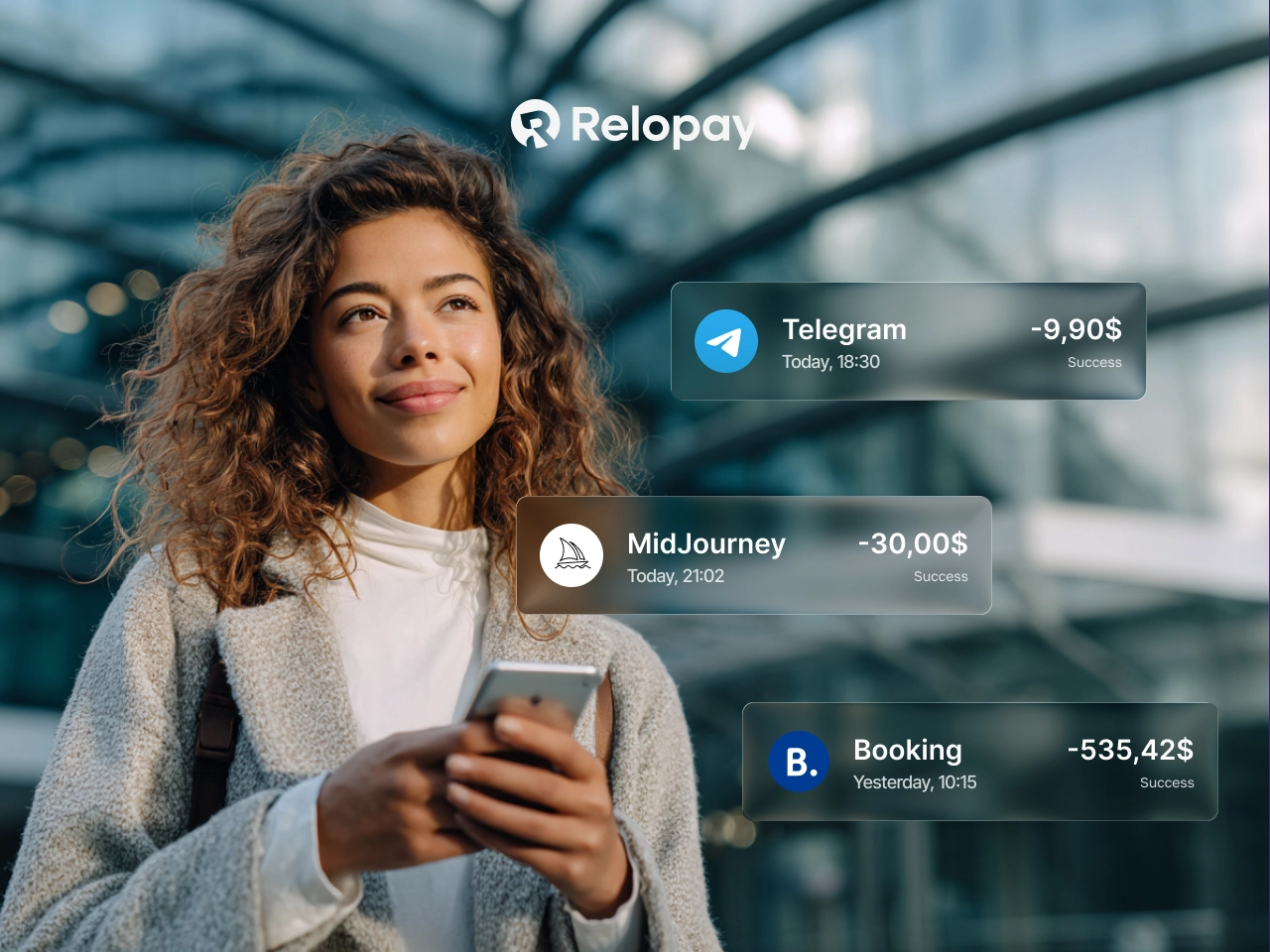
For an online purchase, the flow looks like this: you copy or autofill the card details into a merchant's checkout page. The merchant sends an authorization request through the card network. Relopay converts the corresponding amount of crypto — for example, USDT on the TRC-20 network — into fiat at the prevailing rate and settles with the merchant. Your balance is debited in real time, and the completed transaction appears in the Relopay app with the merchant name, date, and fiat amount.
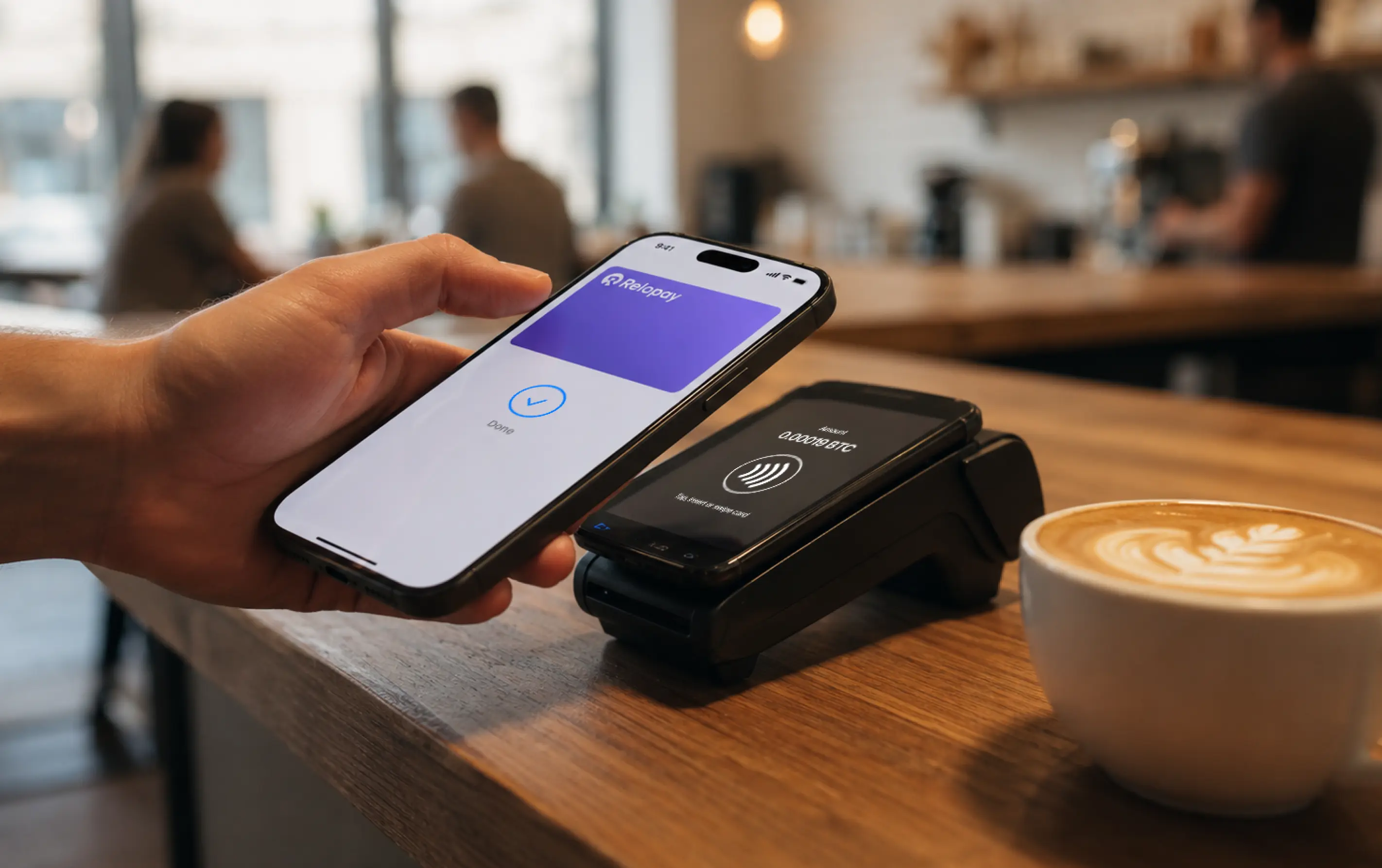
For in-store contactless payments, you add the virtual card to Apple Pay or Google Pay. Tokenization replaces the real card information with a secure token, so the merchant never sees your actual card number. Tap your phone at a contactless terminal, the network processes the payment, and the crypto-to-fiat conversion happens behind the scenes. Every transaction — online or in person — shows up in your history.
Virtual card vs physical card: what's the difference?
The core difference between a virtual card and a physical debit card comes down to form factor and where each one works best.
A virtual debit card has no plastic. Card details are only visible inside the app, and the card cannot be swiped or inserted into chip terminals directly. However, when added to a digital wallet on your phone or smartwatch, it functions at contactless terminals just like a traditional card would.
A physical card still has its place. ATM withdrawals require plastic. Some older offline terminals, rural gas stations, and certain hotels or car rental desks insist on seeing a card in physical form before they process a transaction. If a terminal lacks NFC support, a phone tap will not work.
Relopay currently issues virtual cards; an optional physical card linked to the same balance is planned but not yet available. Consider this scenario: a user traveling to Berlin in 2026 pays for metro tickets, restaurants, and cafés with contactless payments from the Relopay virtual debit card on their phone — and could later add a physical card for regions where older POS devices are common, once that option launches.
Virtual cards vs digital cards: clearing up the terminology
Many people use "virtual card" and "digital card" interchangeably, but there is a meaningful difference.
A virtual card is a card that exists only in electronic form. It has its own card number, expiry, and CVV, but it is never printed on plastic. A digital card, on the other hand, is a digital representation of any card — virtual or physical — stored in a wallet like Apple Pay, Google Pay, or Samsung Wallet for tap-to-pay in store.
A Relopay virtual debit card is a virtual card by definition. When you add it to Apple Pay, it also becomes a digital card. So if you tap your phone at a café terminal, you are using your virtual card as a digital card. Meanwhile, someone with a traditional plastic card stored in Apple Pay also has a digital card, but it originates from a physical card. Keeping these definitions straight helps when comparing products and understanding what each payment method actually involves.
Security advantages of virtual debit cards
Virtual debit cards help reduce common card fraud risks that come with carrying plastic.
Since card details — number, expiry, CVV — sit behind a secure app login and, on supported devices, biometric authentication, there is no physical card to photograph at a restaurant table, skim at a compromised ATM, or steal from your pocket. This significantly lowers exposure to the most common forms of card fraud.
Spending limits, per-merchant caps, and per-transaction limits act as safety nets. If card information is somehow compromised, potential losses are limited by the caps you set. You can also lock or unlock the card anytime from the app and receive real-time push notifications for every transaction, helping you spot suspicious activity quickly.
Relopay implements tokenization when cards are added to Apple Pay or Google Pay, meaning merchants only see a token rather than real card data. 3D Secure is supported for online checkouts, and if a card is ever compromised, you can generate a replacement card quickly via the Telegram Mini App. Industry research suggests virtual card payments account for a smaller share of fraudulent transactions than several other payment methods, making them a strong option for reducing fraud exposure.
Benefits of virtual debit cards for everyday online purchases
For online purchases — ecommerce, streaming subscriptions, digital courses — virtual debit cards offer a level of convenience and control that is hard to match with physical plastic.
The advantage starts at issuance. You do not need to wait for a card to arrive by mail. Once your account is verified, you can create a new card and start spending, whether you are signing up for Amazon Prime, booking an Airbnb, or purchasing an app on Google Play.
Subscription control is another key benefit. You can issue multiple virtual cards, dedicating one card to Netflix, another to cloud storage, and a third to a design tool. When you want to cancel a service, you disable that specific card rather than chasing down the merchant's cancellation page. This is a practical payment method for anyone juggling several recurring charges.
Relopay users can deposit USDT, USDC, ETH, BTC, TON, or BNB into their Relopay wallet — where it is converted to fiat — and pay on any site that accepts standard debit card payments, even if the site does not support crypto directly. Imagine this: a freelancer creates a Relopay virtual debit card in June 2026 to pay for a yearly Spotify subscription and a one-off Udemy course, with spending limits configured for exactly those purchases. No traditional bank account is needed to get started.
Using a virtual debit card in store with your phone
Virtual cards are not limited to online use. They work in store through contactless payments via your phone.
To set this up, add your virtual card to Apple Pay or Google Pay. The provider verifies your identity — typically through an SMS code or in-app confirmation — and issues a tokenized version of the card to your device's wallet. From that point forward, paying in a physical store takes seconds.
At checkout, unlock your phone with Face ID or fingerprint, hold it near the terminal displaying the contactless symbol, and tap. The network processes the payment as a normal debit transaction. You will see the charge reflected in your app.
Common use cases include supermarkets, public transport gates, ride-hailing services, and coffee shops where customers increasingly pay by phone instead of cash. For Relopay users, the virtual debit card can be used wherever the card network is accepted worldwide, with real-time crypto-to-fiat conversion behind the scenes.
Types of virtual cards: disposable vs multi-use
Not all virtual cards work the same way. The two main categories are disposable (single-use) and multi-use.
Disposable virtual cards generate a card number tied to one transaction only, or with a very short window after first use. They are useful for free trials, one-off purchases from merchants you do not fully trust, or websites without strong security reputations. Once used, the number expires, so even if it is leaked, it cannot be reused.
Multi-use virtual debit cards behave like a regular card: same number, reusable for recurring charges, suitable for subscriptions and routine online purchases. Many crypto card providers — Relopay included — focus on multi-use cards for everyday spending.
A practical example: use a disposable card for a one-time purchase from a newly discovered online store, and keep a multi-use Relopay card for your monthly cloud storage and streaming bills.
Managing your virtual debit card from your phone
One of the things that makes a virtual card compelling is the control you get from your phone — no branch visits, no support calls.
From the Relopay Telegram Mini App, you can view full card details including card number, expiry, and CVV. You can create a new card, rename it (for example, "Travel July 2026"), set spending limits per day or per transaction, enable or disable online or in-store usage, and freeze or unfreeze the card. You can manage multiple virtual cards from one account and close any of them when they are no longer needed.
Real-time notifications alert you to transactions as they happen. Your spending history is available inside the app, which you can review for budgeting or export for tax records. The ability to set spending limits and monitor activity in real time gives you granular control over your spending. If something looks off, you can lock the card and investigate before unfreezing.
How to get a virtual debit card
You can obtain a virtual debit card from traditional banks or from fintech platforms; the onboarding experience differs.
Banks typically issue a virtual card through their mobile banking app, linked to an existing account balance, with the setup steps and availability varying by institution. Fintech platforms typically offer fully digital onboarding and remote issuance without branch visits.
Relopay follows the digital-first model. Users sign up via Telegram, complete KYC verification with an ID and selfie, deposit crypto into their Relopay wallet (converted to fiat), and obtain a virtual debit card — no traditional bank account required. Once KYC verification is approved, card creation and first use typically follow shortly after.
Relopay Virtual Card in Telegram Mini App
Relopay issues virtual debit cards directly inside a Telegram Mini App, purpose-built for crypto holders and Web3 users. The setup is straightforward: open the Mini App, complete verification, fund your wallet, and create a card. Everything lives inside Telegram, which means there is no separate app to download and no new account credentials to remember beyond your Telegram login.
Main features include digital card creation once your account is verified, funding via USDT, USDC, ETH, BTC, TON, and BNB deposits that are converted to fiat, and acceptance wherever the card network is supported. Card details — card number, expiry, CVV — are viewable only inside the Mini App, protected by your Telegram login plus device-level security such as a PIN or biometric lock. Fees are disclosed upfront and detailed in the section below.
This setup is especially attractive to digital nomads and customers in regions with restricted banking. All you need is a Telegram account and crypto to get started. With Telegram reporting more than 950 million users, issuing a card inside an app people already use daily removes a major adoption barrier — particularly across Southeast Asia, South Asia, and other emerging markets where Telegram usage is high.
Funding your Relopay wallet with cryptocurrency
Relopay's virtual debit card is funded through your Relopay wallet: you deposit crypto, it is converted to fiat, and the card spends the fiat balance.
Supported assets include USDT (TRC-20 and ERC-20), USDC, ETH, BTC (including Lightning), TON, and BNB. You can learn more about how stablecoins power these conversions in everyday payments.
The basic flow: transfer crypto from an external wallet or exchange into your Relopay wallet inside the Telegram Mini App. When you spend — online or in store — the equivalent fiat amount is deducted from your balance. The applicable rates and fees are displayed at top-up.
Consider this scenario: a freelancer paid in USDT on a Web3 platform transfers part of that balance to Relopay and uses the virtual debit card for groceries, transport, and a coworking day pass — converting crypto to spendable fiat without needing a traditional bank account.
Fees, limits, and foreign currency spending
Before committing to any virtual debit card, understand the fee structure and limits.
Common virtual card fees across the industry include issuance fees, monthly maintenance, transaction fees, FX markups, and ATM withdrawal charges for physical cards. Virtual debit cards often reduce several of these — no shipping and no plastic manufacturing.
Relopay's fees: a 1% top-up fee plus a card issuance fee starting at $3. Issuance and service fees vary by region — in some markets, issuance is around $20 with monthly service fees around $3.99. Monthly spending caps also vary: in certain Asian jurisdictions, the limit is approximately $4,000 per month. Daily and per-transaction limits apply as a safeguard against large unauthorized charges. Always review the full fee schedule for your region before ordering a card.
For foreign currency spending, Relopay handles the crypto-to-fiat conversion in the merchant's local currency, with applicable rates shown in the app. A traveler scenario: in May 2026, a user spends in EUR in Lisbon, USD for online purchases, and THB in Bangkok — all with the same Relopay virtual debit card. The app shows converted amounts and remaining limits for each transaction.
Who are virtual debit cards great for?
Virtual debit cards are especially useful for digital nomads, expats, and travelers who need flexible, secure payment options across borders. These users often move across countries and benefit from a payment method that works wherever the card network is accepted, without opening multiple local bank accounts.
Other users who benefit include:
- Online shoppers wary of card theft or data breaches at unfamiliar merchants.
- Subscription-heavy users seeking easier management and cancellation of services.
- Individuals who frequently lose or damage physical cards.
Relopay's primary audience blends crypto and everyday spending: global crypto holders, Web3 freelancers paid in stablecoins, and people in regions with limited access to traditional banking. For example, a digital nomad traveling between Lisbon, Bangkok, and Buenos Aires in 2026 can use a single Relopay virtual debit card — funded by USDT deposits converted to fiat — for expenses wherever the card network is accepted.
If you hold crypto and want a simple way to spend it, a virtual debit card offers a direct route from your wallet to millions of merchants.
Practical tips for using virtual debit cards safely
Even with strong security features built in, your habits still matter.
Enable biometric login and strong PINs on the app. If supported, disable screenshots on card detail screens to prevent accidental exposure. Use lower limits on cards you use at unfamiliar websites and dedicate separate virtual cards for different categories — travel, subscriptions, daily spend.
Check your transaction history regularly and turn on instant alerts so you can spot suspicious activity early. If you see a charge you do not recognize, freeze the card immediately and investigate.
With Relopay, you can generate a replacement card if your card details are ever exposed in a data breach, minimizing disruption: the old card is disabled, a new one is issued, and your balance carries over. Also remember: converting crypto to fiat is typically a taxable event in many jurisdictions, so keep records of each transaction for tax reporting.
How to set up your first Relopay virtual debit card
Getting started with Relopay takes a few simple steps.
First, open Telegram and find the official Relopay Mini App. Start the bot and register your account. Second, complete KYC verification by submitting an ID document and a selfie — Relopay uses this to comply with AML regulations and keep the platform secure. Verification times vary. Third, once approved, create a new virtual debit card directly inside the Mini App. Fourth, deposit supported crypto from your external wallet into your Relopay account.
Once created, your card is ready to use. Copy the card details for online purchases, or add it to Apple Pay or Google Pay for in-store contactless transactions.
Future of virtual debit cards and Web3 payments
Virtual debit cards, digital cards, and the broader Web3 economy are converging rapidly as of mid-2026.
The numbers tell the story: according to Spark research, crypto-linked card volume grew approximately 525% year-over-year in 2025, with annualized volume reaching roughly $18 billion in early 2026, and USDT and USDC accounting for about 90% of total transaction value. More merchants support tap-to-pay worldwide, and card-on-file subscriptions continue to rise.
Platforms like Relopay are bridging the gap between crypto assets and everyday payments, letting users convert stablecoins to spendable fiat without routing funds through multiple intermediaries. The regulatory environment is also maturing: the EU's MiCA framework requires crypto service providers to be licensed as CASPs, while KYC and AML requirements continue to strengthen consumer protection globally.
Virtual debit cards are becoming a mainstream payment method for both fiat and crypto-sourced spending. For Telegram and Web3-native users, Relopay offers digital issuance, upfront fees, and acceptance wherever the card network is supported around the world. If you have crypto in your wallet and want to start spending it, open the Relopay Mini App and set up your first virtual debit card.
The opinions expressed in this article are the author's own and do not reflect the views of the card issuer or the card network.