Introduction
Yes, you can pay freelancers with crypto — and thousands of businesses already do. By using established payment platforms, digital wallets, and stablecoins, business owners can compensate international contractors faster, cheaper, and with fewer banking headaches than traditional wire transfers or PayPal. Paying freelancers with cryptocurrency offers speed and low international fees, making it an increasingly practical choice for companies that hire global talent.
This guide covers everything a business owner needs to know about setting up crypto payments for freelancers: choosing the right cryptocurrencies, building compliant payment infrastructure, navigating legal and tax obligations, and — critically — ensuring your freelancers can actually spend what they earn. The target audience is business owners and hiring managers who work with independent contractors across borders and want to offer crypto as a payment option. Whether you manage a remote development team or hire marketing freelancers across multiple countries, this guide is for you.
The short answer: paying freelancers in crypto is straightforward when you use stablecoins for price stability, a reliable wallet or payment processor for execution, and a spending solution like Relopay so freelancers can convert and spend their earnings wherever the card network is accepted.
By the end of this article, you will understand:
- How cryptocurrency payments work for freelancer compensation
- The step-by-step process for setting up crypto payroll infrastructure
- Legal and tax compliance requirements in the U.S. and internationally
- How to overcome common challenges like volatility and freelancer reluctance
- How freelancers can spend their crypto earnings seamlessly using tools like Relopay
Understanding Cryptocurrency Payments for Freelancers
Cryptocurrency payments involve transferring digital assets — such as Bitcoin (BTC), Ethereum (ETH), or stablecoins like USDC and USDT — via blockchain to compensate freelancers for their work. Instead of routing money through banks, intermediaries, and currency exchanges, crypto transactions move directly between wallet addresses, settling in minutes rather than days.
This model is increasingly relevant to the freelance economy. According to a 2024 ZeroHash survey, about 35% of freelancers globally have already received payments in cryptocurrency. Freelancers in regions with limited banking access benefit from cryptocurrency payments, since crypto bypasses geographic restrictions and costly intermediary fees. Paying freelancers in cryptocurrency can simplify cross-border transactions that would otherwise involve SWIFT fees, currency conversion spreads, and multi-day settlement windows.
Benefits for Business Owners
Traditional international wire transfers typically cost 1–5% in combined fees, plus foreign exchange spreads. Transaction fees for cryptocurrency payments are often lower than traditional bank transfers, particularly when using efficient blockchains or stablecoins. Direct wallet-to-wallet transfers involve fewer costs for peer-to-peer payments since there are no intermediary banks taking a cut.
Speed is another major advantage. While international bank transfers take 1–5 business days, blockchain transactions can settle in seconds to minutes. This faster processing improves cash flow management for your business and builds trust with freelancers who get paid promptly.
Offering crypto payment options also expands your talent pool. Many skilled freelancers — particularly in Web3, development, and digital marketing — actively prefer crypto compensation. Some live in countries with high inflation where stablecoins provide better value preservation than local currencies.
Benefits for Freelancers
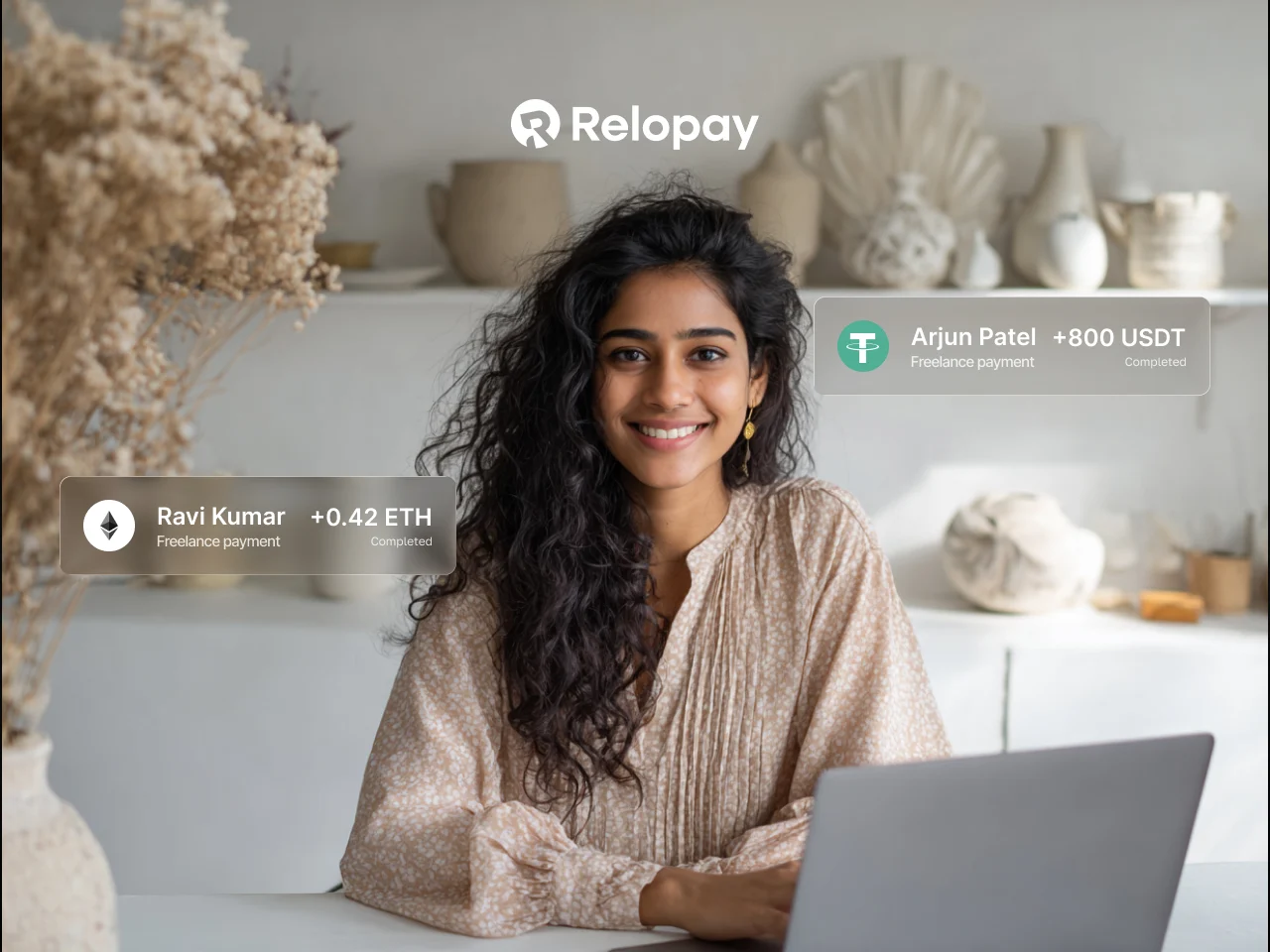
Freelancers can use cryptocurrency for payments without traditional banking. In countries where banking infrastructure is limited, expensive, or where currency controls restrict access to USD or EUR, crypto provides an alternative path to receiving international compensation. A freelancer in Lagos, Dhaka, or Buenos Aires can receive USDC in their wallet within minutes, without needing a correspondent bank relationship.
Freelancers also maintain more control over their funds through self-custodial or custodial wallets, and transactions are pseudonymous on most blockchains. Instant access to funds — without waiting 2–3 days for ACH or 5 days for a wire — means freelancers can manage their money on their own terms.
The remaining question, of course, is practical: once freelancers receive crypto, how do they actually spend it on rent, groceries, and daily expenses? This is where the payment ecosystem needs a final link — a reliable way to convert crypto earnings into spendable fiat.
Setting Up Your Crypto Payment Infrastructure
With the benefits clear, the next step is building the infrastructure that makes crypto payments reliable, compliant, and efficient. This involves three decisions: which cryptocurrencies to use, which platform to pay through, and how to handle legal obligations.
Choosing the Right Cryptocurrencies
Stablecoins reduce the risk of price volatility when paying freelancers. For most business-to-freelancer payments, stablecoins like USDT and USDC are the safest choice because they're pegged to the U.S. dollar, meaning the freelancer receives a predictable value. Using stablecoins allows fast payments while mitigating price fluctuation risk — a critical concern when compensating people for their work.
Bitcoin and Ethereum remain popular options for tech-savvy freelancers who want crypto exposure or who operate in Web3-native environments. Network fees for crypto transactions can vary based on blockchain congestion, though — during peak periods, Bitcoin and Ethereum gas fees can spike significantly. Layer-2 solutions (Polygon, Arbitrum) or alternative chains (Solana, BNB Chain) offer lower costs and faster confirmations.
Whichever asset you choose, confirm chain compatibility between your wallet and your freelancer's. Sending USDC on Ethereum to a Solana address, for example, will result in lost funds. Always confirm which blockchain network your freelancer supports before sending.
Payment Platform Selection
Business owners have two primary paths: direct wallet transfers or dedicated crypto payment processors.
Dedicated crypto payment processors can facilitate freelancer payments by handling conversion, compliance documentation, and accounting integration automatically. Some platforms integrate with tools like QuickBooks or Xero — useful when paying multiple freelancers across different jurisdictions.
Direct wallet transfers are simpler and involve fewer fees, but require manual record-keeping and careful address verification. Cryptocurrency transactions are generally irreversible and cannot be canceled, so errors in wallet addresses can mean permanent loss of funds.
For most businesses, a hybrid approach works well: use a payment processor for regular, recurring freelancer payments where compliance matters, and direct transfers for smaller, ad-hoc payments to trusted contractors.
Legal and Tax Considerations
Legal and tax obligations still apply when paying in cryptocurrency. The medium of payment does not change worker classification rules. In the U.S., the IRS treats cryptocurrency as property, not currency. When a freelancer is paid in crypto, the fair market value in USD at the time of payment is reported as ordinary income.
For contractors (1099 workers), businesses must issue Form 1099-NEC for payments over $600 per year — regardless of whether those payments were made in USD, USDC, or Bitcoin. For employees (W-2), employers must still withhold income tax, Social Security, and Medicare. Using crypto does not exempt companies from payroll taxes or minimum wage laws.
Both the client and freelancer need to understand the tax implications of crypto payments. Freelancers must track the fair market value of cryptocurrency for tax reporting, and any subsequent gain or loss when they sell or convert the crypto may trigger capital gains tax obligations. International compliance adds another layer — different countries have varying rules on crypto income, VAT/GST, and foreign exchange reporting.
This is general information, not tax or legal advice — consult a professional familiar with digital assets for your specific situation.
How to Pay Freelancers with Cryptocurrency
This section provides the practical, step-by-step process for executing crypto payments to freelancers, along with a comparison of payment methods to help you choose what fits your business.
Step-by-Step Payment Process
- Agree on cryptocurrency and payment terms in the contract. Specify which crypto asset (e.g., "USDC on Ethereum"), the payment frequency, who bears conversion costs, and the exchange rate reference point (e.g., CoinGecko at time of payment). Include dispute resolution terms.
- Set up your business crypto wallet or payment processor account. For direct payments, use an institutional-grade or multisig wallet for security. For processor-based payments, complete platform onboarding, including KYC/AML verification.
- Obtain the freelancer's wallet address and verify accuracy. Confirm the correct blockchain network, and always send a small test transaction first to verify the address is correct and accessible.
- Process payment and provide transaction confirmation. Send the agreed amount, then share the transaction hash (TXID) as confirmation. Record the timestamp, crypto amount, and USD fair market value at the moment of transfer.
- Document the transaction for accounting and tax purposes. Maintain complete records: date, amount in crypto, USD equivalent at payment time, wallet addresses, and transaction hashes. These records are essential for tax reporting, bookkeeping, and potential audits.
Payment Methods Comparison
For businesses paying a single freelancer occasionally, direct transfers offer simplicity and lower costs. For companies managing multiple international contractors with ongoing compliance needs, a payment processor provides management infrastructure worth the added cost.
Ensuring Freelancer Spending Solutions
Here is where many crypto payment setups fall short: the freelancer receives crypto but can't easily spend it on daily expenses. Without a practical off-ramp, crypto compensation creates friction rather than solving problems.
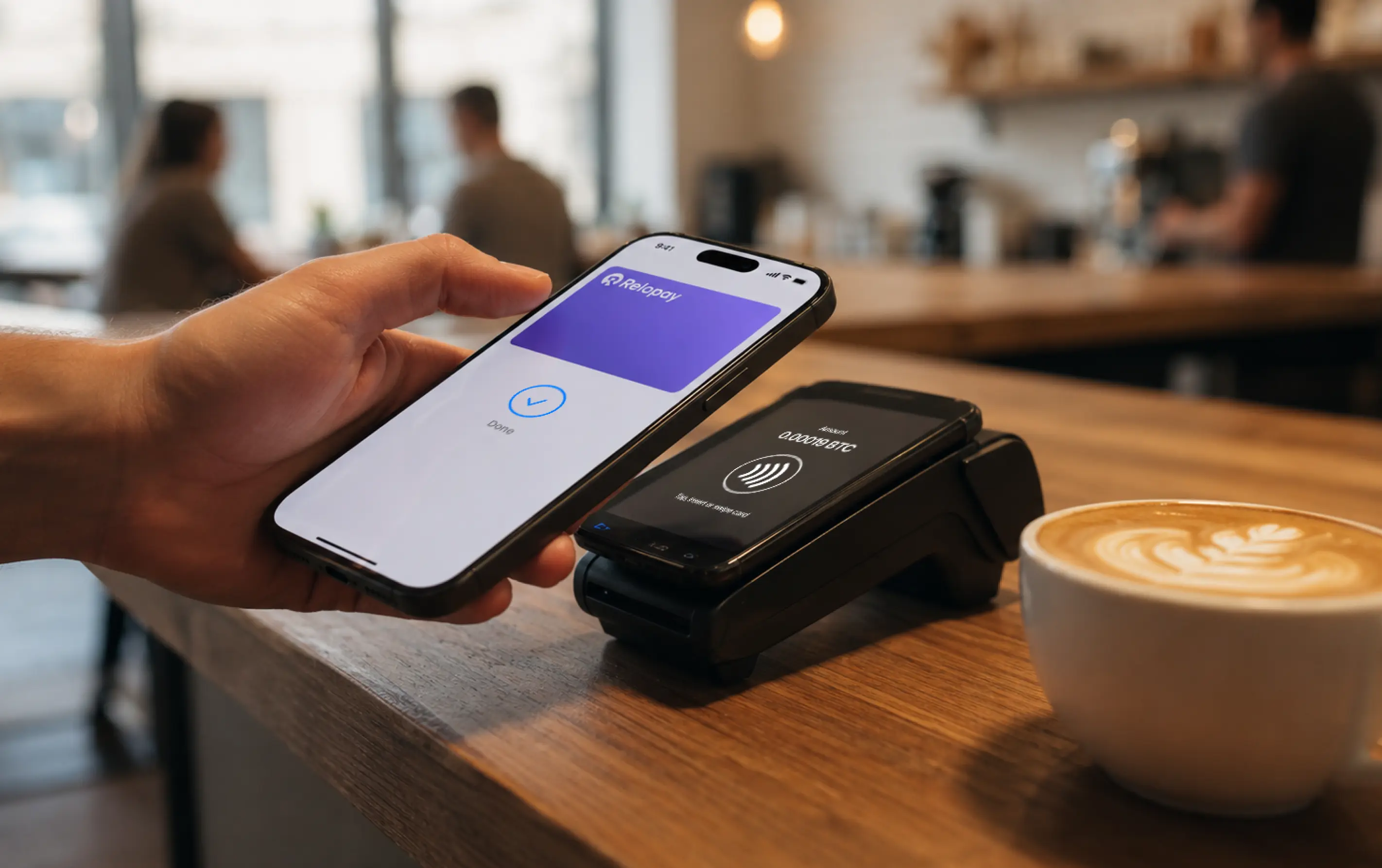
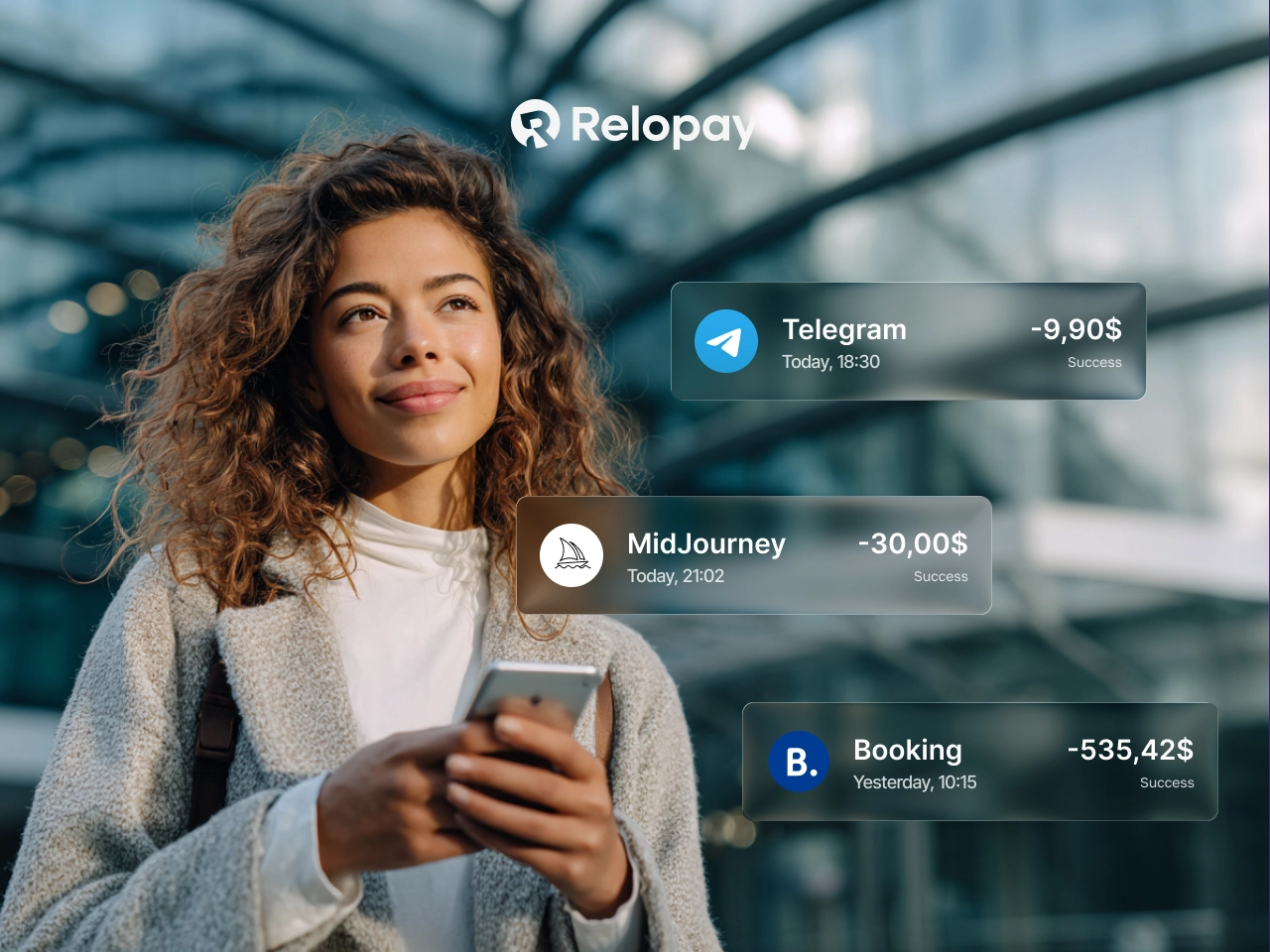
This is exactly the gap that Relopay's card fills. Freelancers can fund it with cryptocurrencies like BTC, ETH, USDT, USDC, TON, and BNB, then spend wherever the card network is accepted — converting crypto to fiat at the point of sale, with costs shown upfront before they confirm.
Relopay operates via a Telegram-based mini app, with a Progressive Web App (PWA) launching soon. Freelancers complete verification, access a custodial crypto wallet, top up with supported assets, and convert to fiat when loading their virtual card (physical card coming soon). They can then spend like they would with any other card, wherever it's accepted. This makes Relopay particularly valuable for digital nomads, remote workers in countries with bank restrictions, and Web3 builders who receive compensation primarily in crypto.
Where supported, Relopay cards also work with Apple Pay and Google Pay, so freelancers can pay contactless from a phone or smartwatch without needing the physical card. By recommending Relopay to your freelancers, you complete the payment ecosystem: your business sends crypto, and your freelancer spends it seamlessly.
Common Challenges and Solutions
Even with solid infrastructure, business owners encounter predictable obstacles when implementing crypto payments. Here are the most common and how to address each.
Freelancer Reluctance to Accept Crypto
Some freelancers hesitate to accept crypto due to volatility concerns, tax uncertainty, or unfamiliarity with digital wallets. The solution is education combined with practical tools. Share resources on getting paid in crypto and recommend user-friendly spending solutions like Relopay. When freelancers understand they can convert earnings to spendable fiat instantly, with costs shown upfront and no surprise charges, reluctance drops significantly. Offering a hybrid arrangement (partial crypto, partial fiat) can also ease the transition.
Price Volatility Concerns
If a freelancer is paid in BTC or ETH, the value could swing 5–10% before they convert, effectively changing their compensation. Stablecoins reduce this risk — USDC and USDT maintain a 1:1 peg with the U.S. dollar. For payments made in volatile assets, specify in the contract that the USD equivalent at time of payment is the agreed amount, and encourage freelancers to convert immediately. A crypto debit card that converts to fiat at checkout removes the exposure window entirely.
Compliance and Reporting Complexity
Managing tax forms, USD fair market valuations, and worker classification across jurisdictions creates administrative burden. Using payment processors with built-in reporting features simplifies this significantly. Maintain detailed transaction records — date, crypto amount, USD value, wallet addresses, transaction hashes — and consult with a tax professional experienced in digital assets. Stay current on regulatory changes, including new IRS guidance on digital assets and local rules in your freelancers' home countries.
Technical Setup Barriers
Not every business owner is comfortable setting up wallets, choosing blockchains, or managing private keys. Start with user-friendly platforms that abstract the technical complexity. Many crypto payment processors offer managed solutions where you provide fiat, and the platform handles crypto conversion and delivery. Use address validation tools, always send test transactions, and consider multi-signature wallets for added security. As your team builds expertise, you can gradually take on more direct management of the process.
Conclusion and Next Steps
Crypto payments give business owners a faster, cheaper, and more inclusive way to compensate international freelancers — when implemented with the right infrastructure, compliance practices, and spending solutions. The combination of stablecoins for stability, payment processors for compliance, and tools like Relopay for freelancer spending creates a complete ecosystem that works for both sides of the payment.
To get started:
- Choose your payment method — stablecoins via a payment processor for most businesses, or direct wallet transfers for simpler setups.
- Set up infrastructure — create business wallets, establish contracts with clear crypto payment terms, and configure compliance workflows.
- Educate your freelancers — share spending solutions like Relopay so they can use their crypto earnings at merchants worldwide without friction.
Related topics worth exploring include setting up recurring crypto payments for retainer-based freelancers, international tax planning for multi-country contractor teams, and building remote crypto-native teams where compensation, governance, and collaboration all operate on-chain.
Your freelancers are already getting paid in crypto. Help them spend it. [See how Relopay works →]
Additional Resources
- Crypto payment processors: Platforms like Bitwage, Deel, and Eco support crypto contractor payments with compliance features built in.
- Tax reporting tools: TokenTax, CoinTracker, and similar platforms help businesses calculate fair market values and generate required tax forms for crypto payments.
- Freelancer spending solutions: Relopay's card lets freelancers convert supported cryptocurrencies (USDT, USDC, ETH, BTC, TON, BNB) to fiat, with transparent onboarding and costs shown before they confirm.
- Educational guides for freelancers: Share Relopay's guides on what crypto cards are and getting paid in crypto to help contractors get comfortable with the process.